



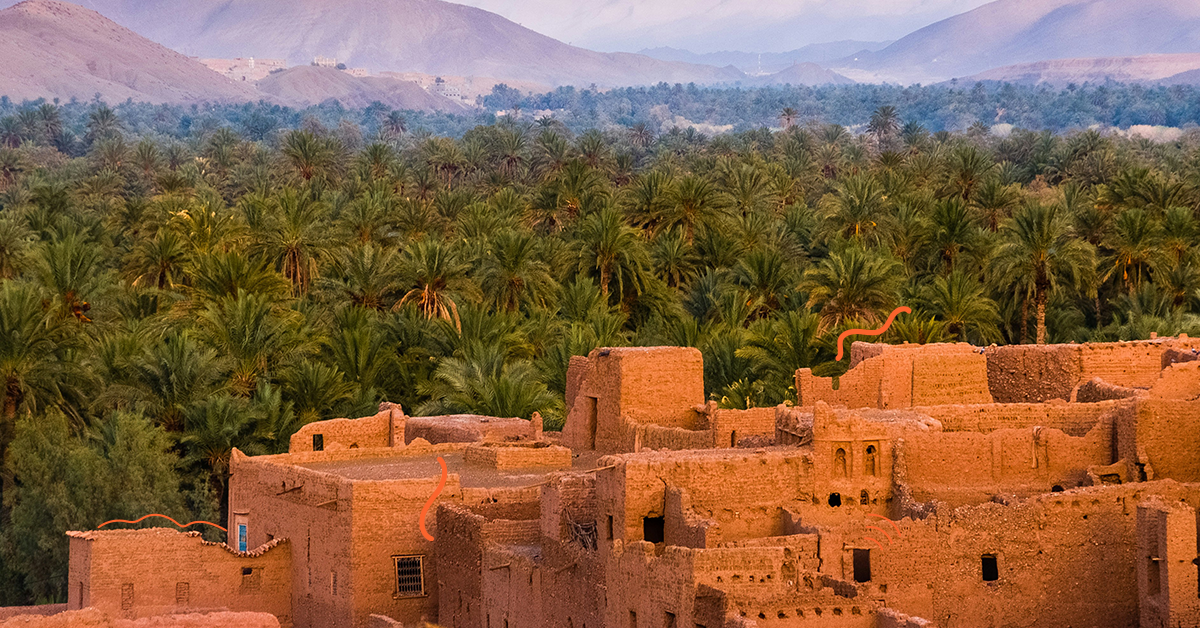
Morocco is an amazing place to explore, but getting around without internet can be trickier than you expect. Medinas are real mazes, and many riads are tucked away down unmarked streets. Without a connection, even booking a ride or finding your bearings can become a challenge.
Morocco also falls outside EU roaming rules, so using your usual plan can get expensive if you haven’t checked the rates. Before you travel, it’s worth understanding your options for staying connected and choosing the one that works best for you.
Here’s how internet access works in Morocco, the options available, and how to choose a connection that’s ready when you arrive.
How internet access works in Morocco
Mobile coverage in Morocco is generally good in major cities such as Marrakesh, Fez, Casablanca, and Rabat. It also tends to work well in tourist areas and along the busiest roads.
However, the connection can be less reliable or more limited in places like:
- The narrow streets of a medina
- Riads tucked away inside old neighborhoods
- Desert areas and the Atlas Mountains
- Routes and excursions between cities
Morocco’s main mobile carriers are Maroc Telecom, Orange Maroc and Inwi. All offer good coverage in cities, though service can vary considerably in rural areas.
You’ll find Wi-Fi in hotels, riads, and many restaurants. The catch? It isn’t always fast or reliable, so relying on it alone can be more frustrating than helpful.
Where mobile data comes in handy in Morocco
There are places and moments when having mobile data makes all the difference during your trip:
Marrakesh medina
→ Narrow streets, endless turns, and unclear directions. It’s easy to get lost without maps to help you find your way.
Fez medina
→ Known for its maze-like layout, the medina can be a real challenge to navigate without a connection.
Desert excursions:
→ Coverage can be patchy, and Wi-Fi is very hard to come by.
Atlas Mountains:
→ Rural areas where the signal is limited, with no connection at all along some stretches.
Travel between cities:
→ You may need to check routes, schedules, or bookings, or contact your driver along the way.
Tucked-away riads:
→ Many places to stay are hidden down side streets with few signs. Finding them without GPS can be tricky.
In these situations, Wi-Fi alone usually isn’t enough. It may be unavailable, slow, or stop working just when you need it most.
Mobile data, on the other hand, gives you more freedom: you can find your way, book a ride, look up recommendations, or handle unexpected problems without hunting for a Wi-Fi network.
What’s the best way to get internet in Morocco?
When you travel to Morocco, you have several ways to get online. The main differences are how much effort they take… and how much you want to spend.
Roaming
Morocco isn’t covered by the European Union’s roam-like-at-home rules, so using your usual plan can cost a lot more than you expect.
Depending on your carrier, the price per MB can be high. Data use adds up quickly with everyday apps like Google Maps, WhatsApp, Instagram or a translator.
The catch? Even moderate use can leave you with an unexpected bill when you get home.
👉 That’s why roaming is usually the least appealing option.
Buying a local SIM in Morocco
Another common option is to buy a local SIM when you arrive. You can find them at airports, carrier stores, and some tourist spots.
On paper, it sounds good: affordable prices and good coverage.
In practice, though, there are a few drawbacks:
- Finding a store as soon as you land
- Possible lines at the airport
- Swapping your physical SIM card
- Losing access to your usual number while your SIM is removed
- Setting everything up yourself
👉 It’s a valid option, but less convenient if you want to get your trip started without wasting time.
An eSIM before you travel: the easiest option
The most convenient alternative is to buy an eSIM before you travel and install it on your phone ahead of time.
That way, your connection is ready to use when you land in Morocco.
Key benefits:
- Get connected at the airport when you arrive
- No need to find a store or wait in line
- Keep your usual number
- Quick, straightforward activation
- No physical SIM swap
👉 More travelers are choosing this option because it keeps things simple and lets you focus on enjoying your trip.
So, which option is worth it?
If you want to avoid surprises and start your trip with everything ready, your best bet is to get your eSIM ready before you leave. You’ll save time on arrival, skip the hunt for Wi-Fi, and have your connection ready from the start.
Your Morocco eSIM, ready before you go
Want to keep things simple? Get your connection sorted before you leave. With an eSIM from TurTrip you can arrive in Morocco with your internet connection ready, without relying on Wi-Fi or looking for a SIM card when you land.
All you need to do is:
- Choose your data plan
- Install your eSIM in a few simple steps
And you’re all set. No swapping cards, no complicated setup, and no unexpected roaming bill for the data you use on your eSIM.
👉 You can browse Morocco eSIM plans here and get everything ready before your trip.
Because staying connected isn’t just about having internet…
it’s about finding your feet from the moment you arrive.
Sources consulted: Maroc Telecom; Orange Maroc; inwi; Your Europe: EU roaming coverage and conditions. Rates, promotions, and coverage depend on the carrier and your plan. Check the terms before you travel.