



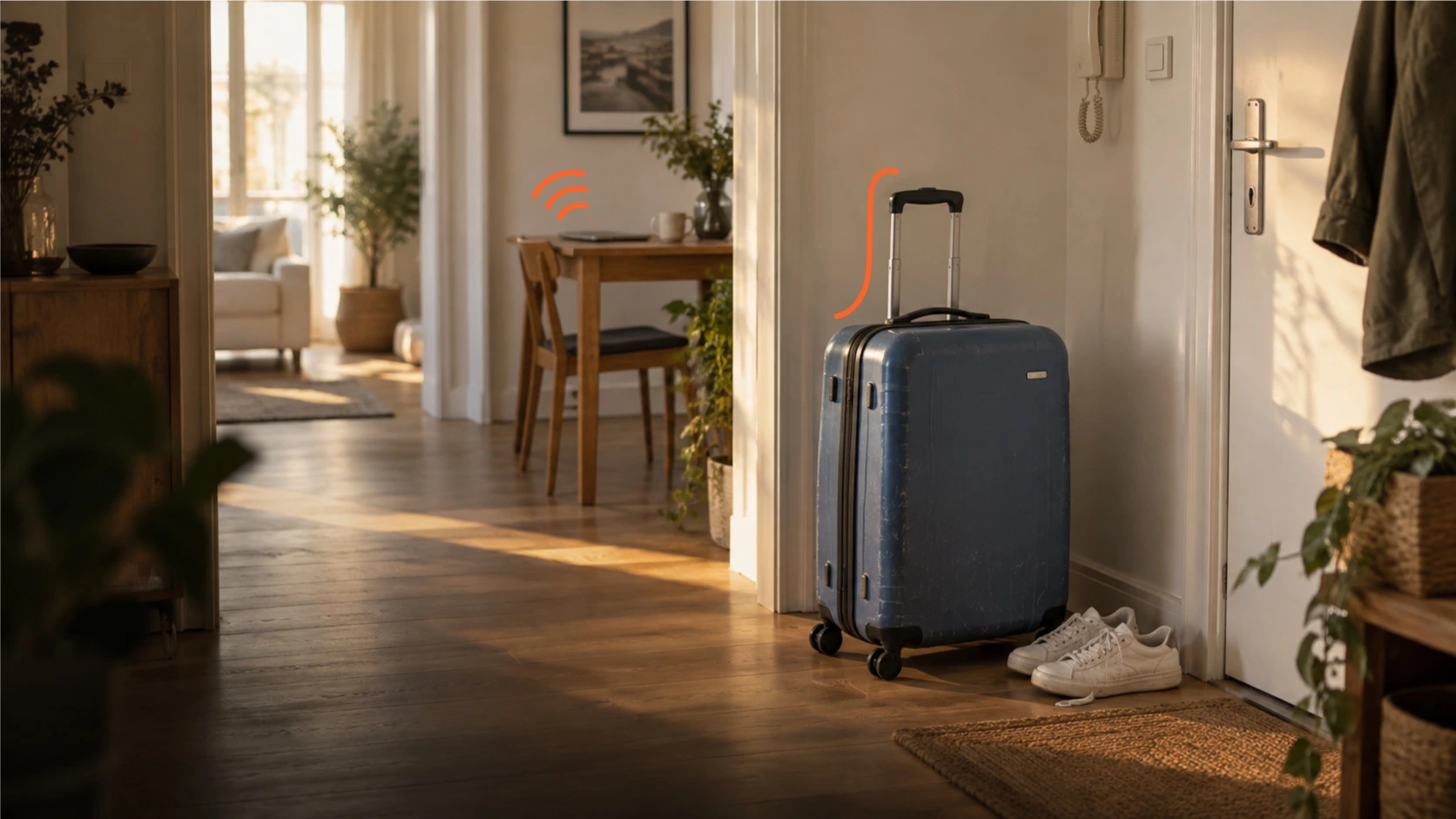
A few days ago, your biggest decision was whether to hit the beach before or after lunch. Today, your suitcase is in the hallway, your fridge is empty, and your inbox seems to have multiplied while you were away.
Welcome to life after vacation: you're back, but part of you is still having breakfast with a view.
September brings schedules, unread messages, and the temptation to sort out your entire life before Monday. As if coming home from a trip also meant becoming a whole new, more productive person.
If you're wondering how to get back into a routine after vacation, here's a gentler approach: get the basics covered, sort out your priorities, and keep a little of what you enjoyed while you were away. No need to tackle everything on day one.
1. Give yourself time to land before catching up
Getting home is part of the trip, too. There's the journey, the luggage, the groceries, and all those little tasks that rarely make it onto the itinerary but still take time.
If you can, leave a little breathing room between getting home and going back to work. That won't always be possible: you might land on Sunday night and start work on Monday. In that case, be realistic about what you can get done when you arrive.
On your first evening home, this might be enough:
- Unpack the essentials: medication, toiletries, chargers, and any clothes you need.
- Figure out your next meal and get the basics ready for breakfast.
- Check what time you start tomorrow and what you need to bring.
Cleaning out every closet can wait. So can editing all 847 vacation photos.
A tip for when you get home: ask yourself, “What three things would make tomorrow morning easier?” Start there and leave the rest for later.
2. Unpack a little at a time. This isn't a test
An open suitcase can turn into a little storage unit next to your bed. Every day you take something out, and every day it promises it'll be gone tomorrow.
Instead of aiming to “get the whole house perfect,” pick a task with a clear finish line: sort the laundry, put away your shoes, or empty your toiletry bag. Then decide whether to keep going.
Breaking bigger tasks into manageable steps is one of the strategies included in the NHS guide to managing stress.
When you're back from vacation, your goal can be as simple as clearing the hallway and having clean clothes for tomorrow. You don't have to get everything organized that same evening.
3. Make room for rest as you get back into your routine
On vacation, schedules tend to slip: long dinners, one last drink, early-morning flights… Back home, your alarm clock returns to its usual routine, but you may still be running on too little sleep. Before asking yourself for more focus and energy, make time to rest.
The NHS recommends keeping regular hours, taking time to wind down before bed, and avoiding caffeine late in the day. It also notes that most adults need seven to nine hours of sleep, though individual needs vary. You can read its guide to sleep and rest.
What could that look like during your first week back?
- Plan your evening with tomorrow morning in mind. If you're getting up early again, avoid filling every evening with plans that push dinner and bedtime later.
- Keep a fairly regular schedule. Try going to bed and getting up at similar times instead of changing your schedule every day.
- Give yourself time to slow down. Reading a few pages, taking a shower, or listening to relaxing music can be part of your bedtime routine. Pick something that won't keep you hooked for another hour.
- Rethink that late-afternoon coffee. If you're drinking more coffee to make up for feeling tired, pay attention to when you have it: afternoon caffeine can make it harder to sleep at night.
- Get the basics ready for tomorrow. Set out your clothes, pack your bag, and get everything you need ready to go. If a to-do pops into your head at bedtime, write it down to look at the next day.
- Give your phone a bedtime, too. Your vacation photos will still be there tomorrow. So will your work emails.
Your first week back doesn't need an extraordinary version of you. Feeling a little more rested is already a good start.
4. Your first day back at work doesn't have to fix everything you missed
Opening your inbox and replying in order can keep you busy all morning without helping you figure out what actually needs your attention.
Before replying to everything, check what's changed: deadlines, decisions, and issues that have already been resolved. If you work with a team, a quick catch-up can save you from chasing old conversations.
Then sort out what's left with a simple approach:
| What's in front of you | What to do |
|---|---|
| An immediate deadline or a task holding someone else up | Check what's needed and make it a priority. |
| Something important that can wait a little | Set aside a specific time for it in your calendar. |
| A conversation that continued while you were away | Read the latest update before jumping in. |
| Information that doesn't need any action | Save or archive it once you've taken in what you need. |
Start with a few realistic priorities. If the workload won't fit into your day, agree on priorities with the right person instead of assuming everything has to be done today.
Your inbox counts messages. It doesn't measure how well you're settling back in.
5. Don't turn September into an impossible list of resolutions
Go to the gym five days a week, cook every meal at home, learn a language, save money, clear out the storage room, and stop checking your phone. All starting Monday, naturally.
Getting back into a routine can be a good time to make a change, but you don't need to make every change at once.
Pick one that's useful and specific: prep tomorrow's lunch, go for a walk after work, or keep one evening free. See how it fits before adding more.
And if you want to get back to an activity you enjoy, find a time you can stick with. A small plan that fits into your week has more staying power than an ideal schedule that stresses you out just reading it.
6. Figure out what you miss about your trip and bring a little of it home
Maybe it isn't just the beach you miss. Maybe it's sitting down for breakfast, walking without checking the time, or spending an afternoon with someone without a screen between you.
Ask yourself: what did I do on vacation that I hardly ever make time for at home?
- If you loved going for walks, try a different route around your neighborhood.
- If you enjoyed taking your time over meals, set aside one meal this week to do just that.
- If you discovered a recipe, make it one evening with your travel companion.
- If you read every afternoon, keep your book handy for when you have a moment.
- If spending time with friends was the highlight, suggest a simple get-together.
It won't be the same as watching the sunset from an island. It doesn't have to be. The idea is to make room for enjoyment in your calendar, even when there's no boarding pass involved.
7. Wrap up the little things left over from your trip
Between work and laundry, it's easy to put shared expenses, downloaded bookings, or the photos you promised to send on the “when I have a minute” list.
Set aside one block of time for those loose ends, without turning it into another whole evening of admin:
- Review shared expenses and check what still needs to be settled.
- Keep any receipts you need and check whether anything has a deadline.
- Back up your photos and pick a few to share.
- Check your phone settings: which line you're using for mobile data now that you're back, and whether it's the one you want to use at home.
If the final cost caught you off guard, note which expense you underestimated most. Our guide to hidden travel costs can help you plan your next trip with a more realistic budget.
The idea is to tie up loose ends and take what you've learned into your next trip. No need to audit every ice cream.
8. Put something you'll look forward to on the calendar
You don't need to book another flight that same night. Try a day trip nearby, an exhibition, breakfast out, or a day with no plans at all.
If thinking about your next getaway makes you happy, save a few ideas and look at when you could go without rushing. Planning can be part of the fun; you don't have to pay for a booking to make September feel better.
You can also explore your own city the way you do when you travel: turn down an unfamiliar street, visit that museum you keep putting off, or try somewhere new.
You don't have to leave your curiosity at the airport.
An easier first week back, one thing at a time
If you're not sure where to start, use this as a rough guide. Adjust it to your schedule and needs; it isn't a challenge you have to complete.
- When you get home: take care of what you need to sleep and start the next day.
- On your first day back at work: catch up and get clear on your priorities.
- During the week: finish unpacking a little at a time and take care of a loose end from your trip.
- Make time for something enjoyable: a walk, a call, or an unhurried meal.
- Before next Monday: decide what can keep waiting.
Getting back into a routine feels more manageable when every task has its place and they aren't all competing for the same day.
FAQs about getting back into a routine after vacation
How do I get back into a routine after vacation?
Start with the basics: get ready for tomorrow, ease back into your usual schedule, and sort out your work priorities. Unpacking, reviewing expenses, and getting back to other plans can happen over several days.
What can I do if I really miss being on vacation?
Figure out what you enjoyed about your trip and find a simple way to keep it going at home: time together, walks, reading, or meals you don't have to rush. Talking about how you feel with someone you trust may help, too.
What if coming home is affecting me more than I expected?
Don't automatically put everything you're feeling down to the end of your vacation. If those feelings are intense, persist, or make daily life difficult, talk to a healthcare professional. The NHS recommends getting help when stress affects your day-to-day life; you don't have to wait a set amount of time. Read its guidance on stress and professional support.
Do I need to book another trip to feel better?
No. You can enjoy gathering ideas for the future or plan something close to home. Your next booking should fit what you want, your schedule, and your budget.
You're home. You don't have to do everything today
You can miss your trip and still be happy to sleep in your own bed. You can look forward to your usual plans and still need a little breathing room.
Vacations end, but what you take away from them can stay with you: a new habit, a conversation to pick up again, or the desire to look at everyday life with a little more curiosity.
For today, dinner, putting down your phone, and getting that suitcase out of the hallway might be enough.
By the way, how did your mobile data hold up on your trip?
Did you have plenty left over, or did you end up hunting for Wi-Fi? While the trip is still fresh in your mind, you might want to check how much data your most-used apps consume.
See how much data each app usesSources consulted: NHS — Every Mind Matters: gestión del estrés; NHS — Every Mind Matters: sueño y descanso; TurTrip: gastos ocultos de un viaje. Las propuestas para organizar la vuelta son orientativas y puedes adaptarlas a tu rutina.